

On January 23, 2026, a disturbing incident unfolded in the Oshawa courthouse that forced the Canadian legal profession to confront a truth many Black lawyers have long known but too often endured in silence. Sudine Riley, a Black woman and criminal defence lawyer, had just completed a trial and was working in a private interview room when uniformed Durham Regional Police officers challenged her presence in the courthouse. What followed, according to her lawyer, was a violent assault: her head was slammed onto a desk, knees pressed into her back and neck, her headscarf ripped off, and she was handcuffed, dragged to courthouse cells, and left injured and bleeding. According to Neha Chugh, counsel for Ms. Riley, she “committed no offence other than being a Black woman practising law.”
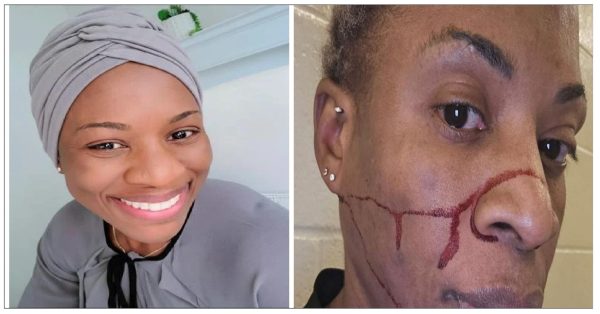
A Disturbing Stereotype
This incident is not merely about excessive force. It is about belonging. It is about the deeply entrenched, anti-Black stereotype that positions Black people in courthouse spaces as suspects rather than professionals; as bodies to be controlled rather than minds to be respected. In Ms. Riley’s case, the stereotype appears to have operated with brutal efficiency: a Black woman in a courthouse was perceived not as a lawyer and an officer of the court, but as someone who needed to justify her presence, someone whose legitimacy in that space was presumptively in doubt.
Courthouses are meant to be sanctuaries of the rule of law. Lawyers should be among the safest people within that space. When a lawyer lawfully present and engaged in professional duties is subjected to violence and humiliation like Ms. Riley, the harm extends far beyond the individual. It strikes at the integrity of the justice system itself. A legal profession in which some lawyers must fear physical harm or degradation while doing their jobs is one that has failed its foundational promise of equality before the law.
The Ms. Riley incident is extreme, but it is not anomalous. It represents the violent end of a spectrum of racialized treatment that Black legal professionals routinely encounter in Canadian courthouse spaces.
Not long ago, I encountered a more subtle, but no less revealing, manifestation of the same phenomenon. I appeared as a self-represented litigant in a Court matter. During a settlement conference, the presiding judge complimented me on my “well-written and structured” statement of claim, remarking that it exceeded the quality he typically encounters among self-represented litigants in his courtroom. The remark was delivered as a compliment, but I found it deeply unsettling. The compliment was not grounded in careful engagement with the pleading. Paragraph one of the statement of claim clearly identified me as a lawyer, a fact I doubt the judge even noticed.
As it did not appear to the judge that a Black, self-represented litigant capable of drafting a “well-written and structured” statement of claim could also be a lawyer, I did not see the need to inform him that I am also a law professor who teaches civil procedure (including the drafting of statement of claim) to future lawyers. The compliment laid bare a stereotypical frame that positioned Blackness and legal competence as incongruent. It reinforced a disturbing truth: in courthouse spaces, Black people are often imagined as occupants of inferior or suspicious spaces in that environment.
This is precisely the logic that animates the treatment of Black lawyers in courthouse environments. Blackness is read as deviation from the professional norm. Presence becomes something to be interrogated. Belonging becomes conditional.
Legal Recognition of Racialized Exclusion: Peel Law Association v. Pieters
In Peel Law Association v. Pieters, the Ontario Court of Appeal confronted a strikingly similar dynamic. Two Black lawyers and a Black articling student were sitting in the Brampton courthouse lawyers’ lounge when a librarian demanded they produce identification to prove they were entitled to be in that space. No white lawyers there were asked for ID. The librarian stated that she did not ask for the ID of the other people in the lounge because she knew that they were lawyers. The Ontario Human Rights Tribunal found, and the Court of Appeal later confirmed, that the demand constituted racial discrimination. The Court acknowledged that racial bias often operates subtly and unconsciously, and that discrimination may be inferred from differential treatment in context.
The message in Pieters was clear: when Black lawyers are treated as presumptive outsiders in professional legal spaces, discrimination has occurred, even if no racial slur is uttered and no malicious intent is professed.
The parallels to the Ms. Riley incident are impossible to ignore. In Pieters, the stereotype manifested as a demand for identification. In Ms. Riley’s, it manifested as handcuffs, violence, and incarceration. In both cases, Black lawyers were effectively told: you do not naturally belong here. The difference is not one of kind, but of degree.
Racialized Surveillance and the Criminalization of Black Presence
Ms. Riley’s treatment also reflects a broader phenomenon scholars have described as racialized surveillance – the heightened monitoring and suspicion of racialized bodies in spaces of power and privilege. As Yale professor Elijah Anderson noted in his work Black in White Space: The Enduring Impact of Color in Everyday Life, “many Whites have not adjusted to the idea that Black people now occupy more positions of privilege, power, and prestige—or just appear in places where they were historically unwelcome. When they see Blacks in such places, many Whites, though not all, unconsciously or explicitly want to banish them to the iconic ghetto—to the stereotypical space where they think all Black people belong, a segregated space for second-class citizens. Not courageous enough to attempt this feat alone, many of these self-appointed color-line monitors seek help wherever it can be found—such as from the police.” (p. 146)
In courthouses, this surveillance is particularly insidious because it is exercised by those who wield state authority: police officers, court staff, and, at times, judges themselves. When racialized surveillance converges with coercive power, the result can be devastating. It was in Ms. Riley’s.
Anti-Black stereotypes have long associated Blackness with criminality. Within courthouse spaces, that stereotype translates into an unspoken assumption that Black people “belong” on the criminal side of the system – as accused persons, detainees, or security concerns – not as lawyers or professionals. Ms. Riley’s experience exemplifies this logic with chilling clarity. Her presence in a lawyer-only space was not read as normal; it was read as suspect. The violence that followed was the tragic consequence of that misrecognition.
Solidarity, Accountability, and the Demand for Reform
The response from the legal community has been swift and unified. The South Asian Bar Association of Toronto, the Canadian Muslim Lawyers Association, the Canadian Association of Black Lawyers, and other organizations have condemned the incident and called for an independent and transparent investigation. Their statements emphasize not only accountability, but solidarity, recognition that what happened to Ms. Riley threatens the safety and dignity of all lawyers, particularly those from historically marginalized communities.
These calls must be heeded. An internal police investigation is insufficient where allegations implicate systemic bias and serious bodily harm. Independent oversight is essential, not only to determine responsibility in this case, but to restore public confidence in courthouse safety for all legal professionals.
Yet accountability alone is not enough. Structural reform is required. Courthouse security practices must be reviewed through an anti-racist lens. Training on unconscious bias and cultural competency must be meaningful and ongoing. Clear protocols must ensure that lawyers are not arbitrarily challenged, removed, or subjected to force. And perhaps most importantly, the legal profession must continue to name and confront the stereotypes that underlie these incidents.
Conclusion: Belonging Is Not Conditional
The question at the heart of this discussion is not merely whether Ms. Riley was mistreated. The answer is self-evident. The deeper question is why such mistreatment remains imaginable, and in some cases permissible, within Canadian courthouse spaces.
As Black lawyers, we do not need to prove that we belong to these spaces. We already do. We do by virtue of our legal training, our licensing, our service, and our commitment to justice. Our presence in courtrooms, interview rooms, and judges’ chambers is not an exception; it is a right comes with our qualification to practice law.
The Sudine Riley incident should be a turning point. It should force the legal profession to confront how anti-Black stereotypes continue to shape who is seen as legitimate, safe, and worthy in our most powerful institutions. It should compel us to ensure that no lawyer – no matter their race, gender, or religious expression – ever again has to fear violence for simply doing their job.
Courthouses must be spaces where justice is practiced, not betrayed. And justice cannot exist where Black lawyers are made to feel that they do not belong.
Cause, we belong here, too.
The post We Belong Here: Black Lawyers in Canadian Court Spaces appeared first on Slaw.